08 July 2021 (14:30-UTC-07 Tango 06) 17 Tir 1400/28 Dhu l-Qa’da 1442/29 Yi-Wei 4719
Children on Minot Air Force Base, North Dakota, get a lesson on how to eat crickets during a survival course. U.S. Air Force photo by Airman First Class Jessica Weissman.
When I first moved to Southeastern Idaho (25 years ago), I experienced one of the cyclical swarming of grasshoppers in the region. When grasshoppers swarm and eat everything in site they are called Locust.
U.S. Forest Service personnel instruct Marine Corps & Navy personnel how to survive by eating bugs like crickets. U.S. Navy photo by Seaman Matthew F. Jackson.
Not only was my garden in my yard being inundated with plant eating grasshoppers, but while hiking in the Scout Mountain area I observed tens of thousands of grasshoppers cannibalizing each other. In an open field the ground was undulating, upon closer inspection it was a carpet of grasshoppers doing battle, biting each other’s heads off and then eating the loser (and I they were bleeding red blood)!
U.S. military personnel taking a survival course on Spangdahlem Air Base, Germany, get a boxed lunch of crickets. USAF photo by Airman First Class Gustavo Castillo.
U.S. Army soldier chows-down on roasted crickets during survival training on Camp Friendship, in Thailand. U.S. Army photo by Staff Sergeant David N. Beckstrom.
Five years old girl from Guatemala found wandering alone along the Tijuana River channel, 07JUN2021.
FLORIDA:
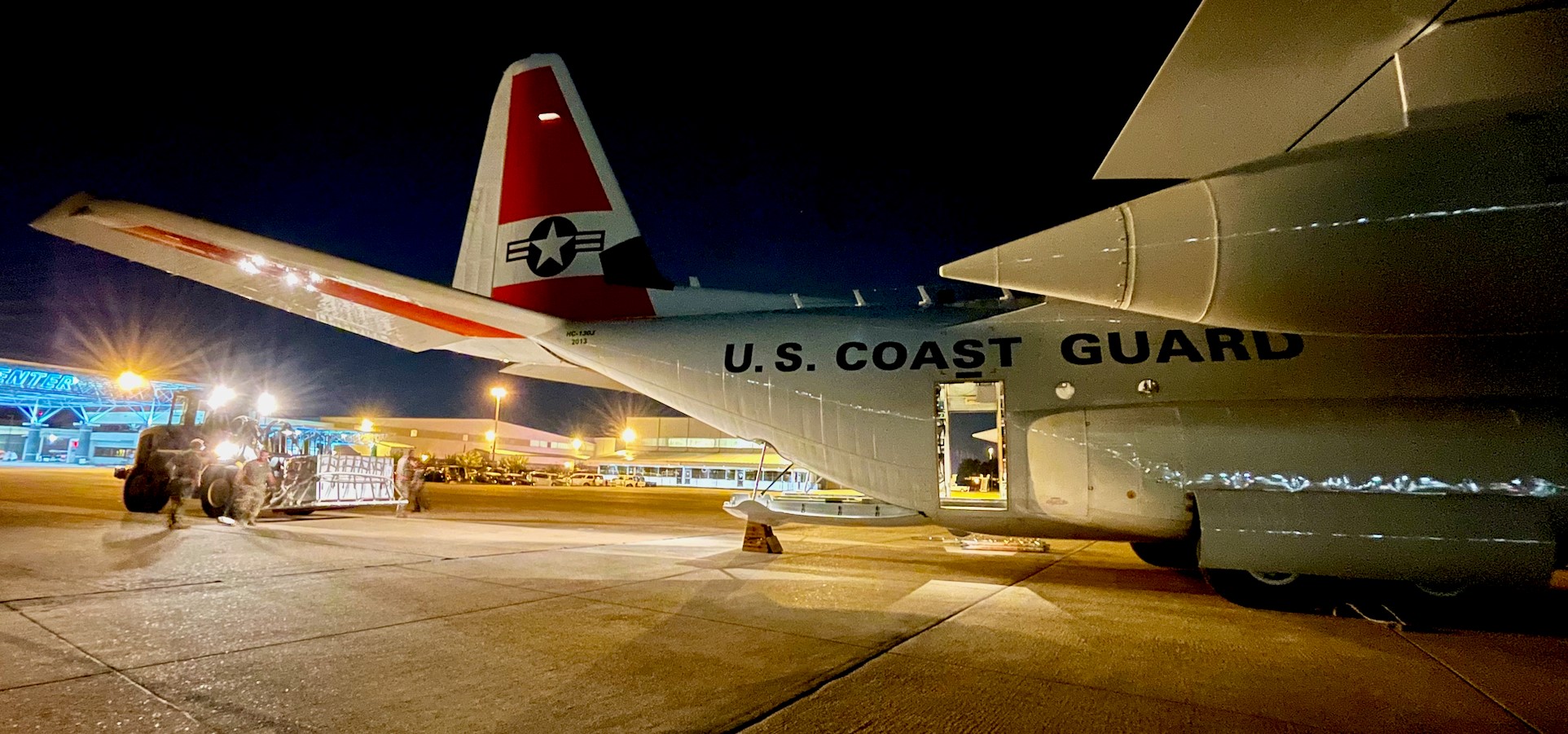
U.S. Coast Guard photo by Petty Officer Third Class Ryan Estrada.
23JUN2021, U.S. Coast Guard (USCG) captured 11 illegals from Cuba, in their home made corrugated boat.
USCG photo by Chief Petty Officer Charly Tautfest.
14JUN2021, USCG off-loads more than 7-thousand-5-hundred pounds of cocaine at Port Everglades, in Fort Lauderdale.
USCG photo by Petty Officer Second Class Ashley Johnson.
The USCG, and local Florida police, captured 16 illegals from Cuba, 09JUN2021.
USCG photo by Petty Officer Second Class Ashley Johnson.
05JUN2021, USCG captures 21 Haitians and one Colombian. 20 of the illegals from Haiti were sent back home on 10JUN2021.
USCG photo.
USCG chases a boat filled with a dozen illegals from Cuba, 03JUN2021. USCG reports they captured so many Cubans that week that on 08JUN2021 they sent home 82 of them.
U.S. Air Force photo by Airman First Class Thomas Sjoberg.
On 19MAY2021, packages of cocaine began washing up on the beach of Cape Canaveral Space Force Station. The illegal drug was found by the Station’s wildlife manager while conducting a sea turtle nesting survey.
USAF photo by Airman First Class Thomas Sjoberg.
The origin of the nearly 30 kilograms of cocaine is still being investigated.
On 25JUN2021, the USCG/Caribbean Border Interagency Group sent back home 38 illegals from Dominican Republic. They built themselves a homemade boat, but were captured on 24JUN2021.
“….plan, organize, equip, train, exercise for responding to and recovering from a catastrophic incident resulting in extraordinary levels of mass casualties, damage or disruption severely affecting the population, infrastructure, environment, economy, morale and/or government functions.”-Major General Bret D. Daugherty, Washington National Guard
Since a massive tsunami would render all the sea ports useless, on 05JUN 2016 they practiced using a Heavy Ground Mobility System (HGMS) truck to deploy a temporary modular roadway. This is known as a Joint Logistics Over the Shore (JLOTS) operation. Washington Army National Guard photo by Sergeant Michael Tietjen.
Video of Modular Roadway deployment:
Video of JLOTS operation:
Video report explaining why JLOTS would be needed after a Cascadia Event, Washington Army National Guard’s 331st Transportation Company boasts that it is the only U.S. unit with this specific Combined Joint Logistics Over-the-Shore (CJLOTS) configuration:
Navy Region North West (NRNW) Operations Center, in Washington state, will serve as a command & control after a CSZ event. U.S. Navy photo by Mass Communication Specialist First Class Jeffry Willadsen, 08JUN2016.
Cascadia Rising 2016 was directed from Naval Base Kitsap, Washington, in coordination with FEMA. U.S. Navy photo by Petty Officer Third Class Jessica Maue.
In 2016, the U.S. Department of Defense (DoD), Federal Emergency Management Agency (FEMA), as well as Oregon and Washington National Guards, conducted a training event called Cascadia Rising. They are preparing for a catastrophic earthquake and tsunami, resulting from an overdue jolt along the Cascadia Subduction Zone (CSZ) off the Pacific Northwest coast of the United States.
07JUN2016, U.S. Coast Guard tested their Deployable Contingency Communications System near Ellensburg, Washington. U.S. Coast Guard District 13 photo.
07JUN2016, Oregon Air National Guard practiced emergency supply operations using TACPs and C-130s. Oregon Air National Guard photo by Technical Sergeant Emily Thompson.
Mass casualty training on Joint Base Lewis-McChord, 08JUN2016. Washington Army National Guard photo by Sergeant Michael Tietjen.
Washington Air National Guard joined with Pierce County Corrections to prevent any breakouts at the Pierce County Jail, 08JUN2016. Washington Air National Guard photo by Technical Sergeant Paul Rider.
While Washington’s Air National Guard tried to prevent a jail break, Washington’s Army National Guard help prisoners ‘escape’ the Hoquiam Jail due to approaching tsunami, 09JUN2016. Washington National Guard photo by Captain Colette Muller.
The first Cascadia Rising event was in 2016, and was considered to be the largest ever disaster response training in the U.S. Pacific Northwest. Cascadia Rising 2016 revealed to authorities that everybody, and every local government operation, needed to be self-supplied for a minimum of two weeks to survive such a catastrophe: “The Cascadia Rising 2016 exercise highlighted a number of critical areas that we, the emergency management community, should improve before this fault ruptures, which will impact large portions of our residents and infrastructure. …..The exercise highlighted a number of infrastructure interdependencies our residents have come to rely on, such as electricity, communications, fuel, water and our roads. Most of these sectors would be heavily disrupted after a CSZ event and plans are being developed and exercised that focus on the efficient recovery of these essential services.”-Sharon Loper, FEMA Region 10
Kentucky and Oregon National Guard conducted mass casualty training at Camp Rilea. Oregon Air National Guard photo by Technical Sergeant John Hughel.
It is also expected that the CSZ event will create toxic environments. Oregon Air National Guard photo by Technical Sergeant John Hughel.
To show you how seriously the DoD and FEMA are taking the overdue CSZ jolt, Cascadia Rising 2016 involved almost 20-thousand personnel from the U.S. Air Force Reserve, U.S. Navy, U.S. Coast Guard, Kentucky National Guard, Oregon and Washington National Guards, Tribes, and civilian emergency response agencies.
Wearing contamination protective gear, Kentucky National Guard conducted rescues of people ‘swept’ into the forest. Kentucky National Guard photo by First Lieutenant Michael Reinersman.
Video interviews, by Staff Sergeant Amy Elker, concerning the nine Tribes in Oregon, in relation to the coming CSZ event:
Wearing contamination protective gear, Kentucky National Guard approach a collapsed building on Camp Rilea, Oregon, 08JUN2016. Kentucky National Guard photo by First Lieutenant Michael Reinersman.
Searching trough collapsed buildings, 09JUN2016. Oregon Air National Guard photo by Technical Sergeant John Hughel.
U.S. Coast Guard Mobile Medical Ship during Cascadia Rising exercise at Naval Magazine Station Indian Island, Washington, 09JUN2016. U.S. Coast Guard photo by Petty Officer Third Class Andrea Anderson.
Cascadia Rising preparations also include crowd control. Oregon Air National Guard photo by Technical Sergeant John Hughel, 10JUN2016.
On 15JUN2016, personnel from the Japan Self Defense Forces toured Port Tacoma, Washington, and gave advice on how to respond to a tsunami. U.S. Army photo by Sergeant Eliverto V Larios.
“A secure and resilient nation with the capabilities required across the whole community to prevent, protect against, mitigate, respond to, and recover from the threats and hazards that pose the greatest risk.”–Federal Emergency Management Agency (FEMA)
During the first week of June, 2021, U.S. Army’s Northern Command (aka Army North) conducted a Rehearsal of Concept (RoC) major nation-wide disaster response discussion, at Joint Base San Antonio-Fort Sam Houston, Texas: “This RoC drill helps us synchronize our whole-of-government effort for an all-hazards response, whether it is a response to a natural disaster, pandemic, man-made hazard, terrorist attack or cyberattack. Having everyone here to synchronize and integrate is extremely important for us to be ready to fulfill our requirements as an integrated, interagency task force to meet the National Preparedness Goal.”-Lieutenant General Laura J. Richardson, Army North
U.S. Army photo by Specialist Jamil Birden.
The nation-wide RoC included the National Guard Bureau and U.S. Transportation Command. Hurricane scenarios focused on category 4 and 5 storms targeting Florida, Georgia, North Carolina, South Carolina, Puerto Rico and the U.S. Virgin Islands. Scenarios also discussed dealing with post-pandemic/CoViD-19 environment ‘challenges’: “These are unprecedented times.”-Damon Penn, FEMA
Recent FEMA Public Service Announcement (PSA) warning people about pandemic and natural disasters:
“Everyone should have their emergency supplies on hand already. Don’t wait until the last minute to go to the store to buy food. Purchase your supplies, get your free sandbags and you’ll be properly prepared.”-Master Sergeant Randy Golleher, U.S. Air Force, Okinawa, Japan
Kadena Air Base, Japan, 10JUN2021. U.S. Air Force photo by Airman First Class Yosselin Perla.
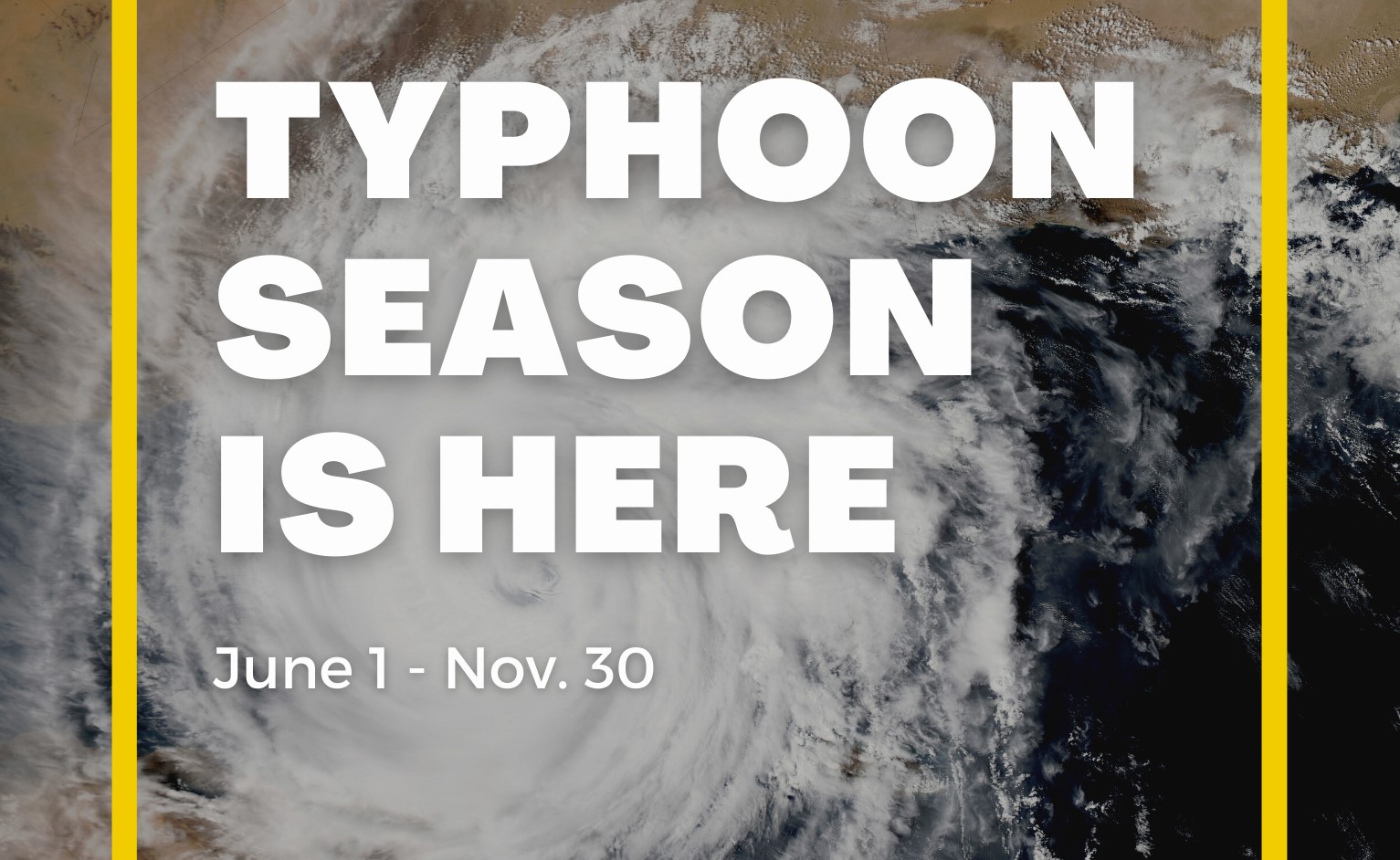
In the Pacific region, hurricanes are called typhoons. They can happen anytime, but the United States Forces Japan (USFJ) considers official Typhoon Season to be June 1st through November 30th.
U.S. Marines Corps graphic.
April is considered Typhoon Prep Month, they’ve even developed the Tropical Cyclone Conditions of Readiness (TCCOR) system: “When a typhoon is approaching, we stand up the virtual Emergency Operations Center with all of our island partners. We also begin to monitor the typhoon through the Defense Communications System and we make sure all military branches understand what TCCOR level we’re in.”-Master Sergeant Randy Golleher, USAF, Okinawa
On the U.S. island territory of Guam, the U.S. Air Force issued a typhoon explainer/prep video. On Guam, official Typhoon Season is May through November:
Also, the Airmen of Anderson Air Force Base, Guam, put together this ‘cheesy’ video on how to properly use a generator to supply electrical power to your home:
This U.S. Marine Corps graphic was designed by Lance Corporal Devin Darden, and displayed in the Marine Corps Recruit Depot, Parris Island, South Carolina.
U.S. Air Force hurricane explainer video (by Staff Sergeant Heather Fejerang) issued by MacDill Air Force Base in Florida. It’s a little boring, but with good advice:
Oregon Air National Guard photo by First Lieutenant N. Daniel Delgado.
During the middle of June 2021, Oregon Air National Guard personnel responded to a mass-casualty CBRNE (Chemical Biological Radiological Nuclear Explosive) event at a place called Camp Rilea.
Oregon ANG photo by First Lieutenant N. Daniel Delgado.
Thankfully it was a training event, known as ‘Rogue One’ ExEval (sometimes meaning Exploitation Evaluation, or Exercise Evaluation, or External Evaluation, they can’t seem to make up their minds as I’ve seen all these used in military press releases), which takes place every two years (biennial).
Oregon ANG photo by First Lieutenant N. Daniel Delgado.
Crews were sent out to look for ‘victims’ who needed decontamination.
Oregon ANG photo by Staff Sergeant Sean Campbell.
A victim is brought in for decontamination.
Oregon ANG photo by First Lieutenant N. Daniel Delgado.
Oregon Air National Guard video by Major Samuel Lee, showing what you can expect if you become a victim and need to be decontaminated:
Oregon ANG photo by Staff Sergeant Sean Campbell.
Even the rescuers/responders are checked for contamination.
“If we didn’t do this training to get the federal Red Card certification, we wouldn’t be able to support the state in every possible scenario. This gives the state the full flexibility to use resources in the National Guard regardless of who’s managing the fire.”-Lieutenant Colonel Michele Edwards, Alaska Army National Guard
Alaska Army National Guard photo by Specialist Grace Nechanicky.
Red Card is also known as Incident Qualification Card, it is a type of fire fighting training that is accepted by various federal and state agencies. Alaska Army National Guard CH-47 and UH-60 helicopter crews conducted Red Card training on 09JUN2021.
Alaska ANG photo by Specialist Grace Nechanicky.
1st Battalion, 207th Aviation Regiment, CH-47 Chinook dragging a 2-thousand-gallon Bambi bucket: “There are no civilian helicopters in state that provide the high-volume, heavy lifts that our CH-47s provide.”-Lieutenant Colonel Michele Edwards, Alaska ANG
Alaska Army National Guard Red Card promotional video by Victoria Granado:
Alaska ANG photo by Dana Rosso.
1st Battalion, 207th Aviation Regiment UH-60 Black Hawk hoisting a 550-gallon Bambi bucket over Joint Base Elmendorf-Richardson.
Video by Victoria Granado, Alaska ANG Bambi bucket ops:
As expected, 2021 is turning out to big a big fire year for The Golden State, yet another U.S. military base evacuated due to wildfire.
Sierra Fire, 09JUN2021. U.S. Marine Corps photo by Lance Corporal Kerstin Roberts.
Not even a month after attempts were made to reduce chances of wildfire, with prescribed burns and training, personnel onboard the U.S. Marine Corps’ Camp Pendleton had to evacuate due to the Sierra wildfire.
S-64E Skycrane. USMC photo by Lance Corporal Kerstin Roberts.
San Diego Sheriff’s Department Bell 205. USMC photo by Lance Corporal Kerstin Roberts.
U.S. Marine Corps video by Corporal Stephen Beard, 1-thousand acres (405 hectares) Sierra Fire, 09-11 June 2021:
The Sierra Fire came despite efforts in May, and early June, to reduce the chance of wildfires.
Prescribed burns, 14MAY2021. USMC photo by Lance Corporal Drake Nickels.
Camp Pendleton Fire Department, and other local agencies, burned more than 120 acres in what’s called prescribed burns, over two days in May. Prescribed burn explainer video by Lance Corporal Daniel Medina:
Then at the beginning of June, wildfire training was held for both military and civilian fire fighters. Interestingly, the Wildland Fire School ended on the same day the Sierra Fire started; June 9th.
Wildland Fire School, 08JUN2021. USMC photo by Corporal Fatima Villatoro.
‘Nat-sound’ video of Wildland Fire School by Lance Corporal Daniel Medina: