This is a 14JAN2024 update to the 01JAN2024, 7.6 magnitude Richter scale (7 Japan Meteorological Agency [JMA] scale) earthquake in Japan.
Deaths of people that happened during the quake are now at 221, at least 22 people are still missing. Almost 5-hundred people in 15 communities across Ishikawa Prefecture remain cut off because of damaged roads.
The administrators of Japan’s Noto Peninsula and Ishikawa Prefecture gave an update to the 7.6 magnitude Richter scale (7 Japan Meteorological Agency [JMA] scale) earthquake on 01JAN2024: The fire that resulted from that quake destroyed at least 2-hundred structures.
As many as 323 people are still missing, at least 168 people confirmed dead.
Aftershocks continue, including a 6-JMA magnitude quake in the town of Shika. However, the JMA continues to doubt the accuracy of their seismographs due to so many quakes happening over a widespread area, they suspect many shockwaves are interfering with, or possibly amplifying, results on seismographs.
More than 1-thousand-5-hundred houses collapsed/damaged.
The weight of heavy snow could cause more buildings to collapse.
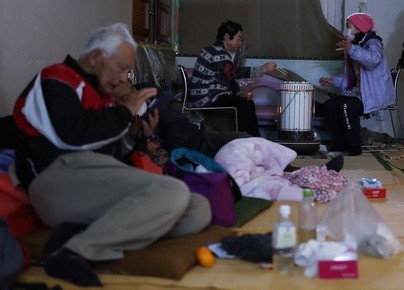
More than 29-thousand people now in evacuation centers.
Many local municipalities have already exhausted their stockpiles of disaster relief items, typically these items are only enough for three days of relief.
At least one evacuation center is reporting a CoViD-19 outbreak. Other diseases are also being reported at all evacuation centers: “Sanitary conditions at shelters are seriously deteriorating. The number of people infected with COVID-19 and influenza is increasing.”-Shigeru Sakaguchi, Mayor of Wajima City
Noto Airport closed due to damaged runways, administrators hope to have the runways repaired by 25JAN2024.
The 01JAN2024 quake created 2-hundred meters of new coastline.
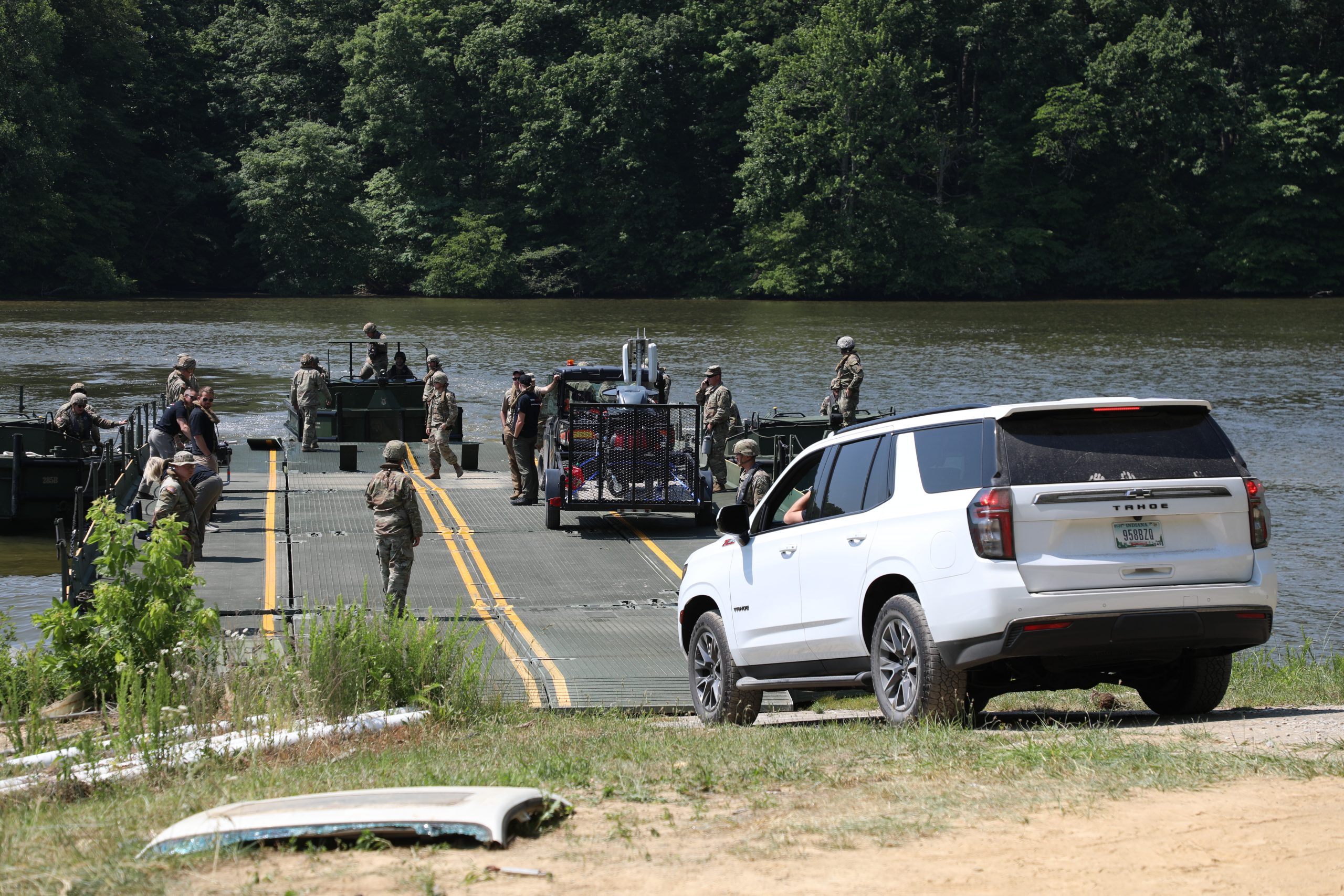
During the second week of June 2023, Air and Army National Guard units from Illinois, Indiana, Kentucky and Ohio conducted earthquake response training, on the Muscatatuck Urban Training Center in Indiana.
Kentucky Army National Guard photo by Sergeant First Class Benjamin Crane, 09JUN2023.
The Kentucky Army National Guard practiced using ‘raft bridges’ to transport vehicles and people across the river, expecting that local bridges would be destroyed by the quake.
Kentucky Army National Guard video showing you how to build a ‘raft bridge’. Video by Sergeant First Class Andrew Dickson, edited by me:
The training event was officially called Homeland Defender 2023, and also involved local emergency responders, and Verizon’s Frontline-Emergency Network operators: “This was a full-scale exercise with the purpose to integrate local, state, federal and military assets, as well as the private sector, to provide support to local authorities during a disaster response.”-Lieutenant Colonel Stephanie Railey, Indiana National Guard Joint Force Headquarters
Indiana Air National Guard video by Airman First Class Amber Anderson, 10JUN2023:
The emergency responders included the Indiana Department of Homeland Security, Indiana Task Force 1, Indiana Helicopter Aquatic Rescue Team, Monroe Fire Protection District, Indiana State Police, Indianapolis Metropolitan Police Department and Fort Wayne Police Department.
Indiana Air National Guard photo by Master Sergeant L. Roland Sturm, 10JUN2023.
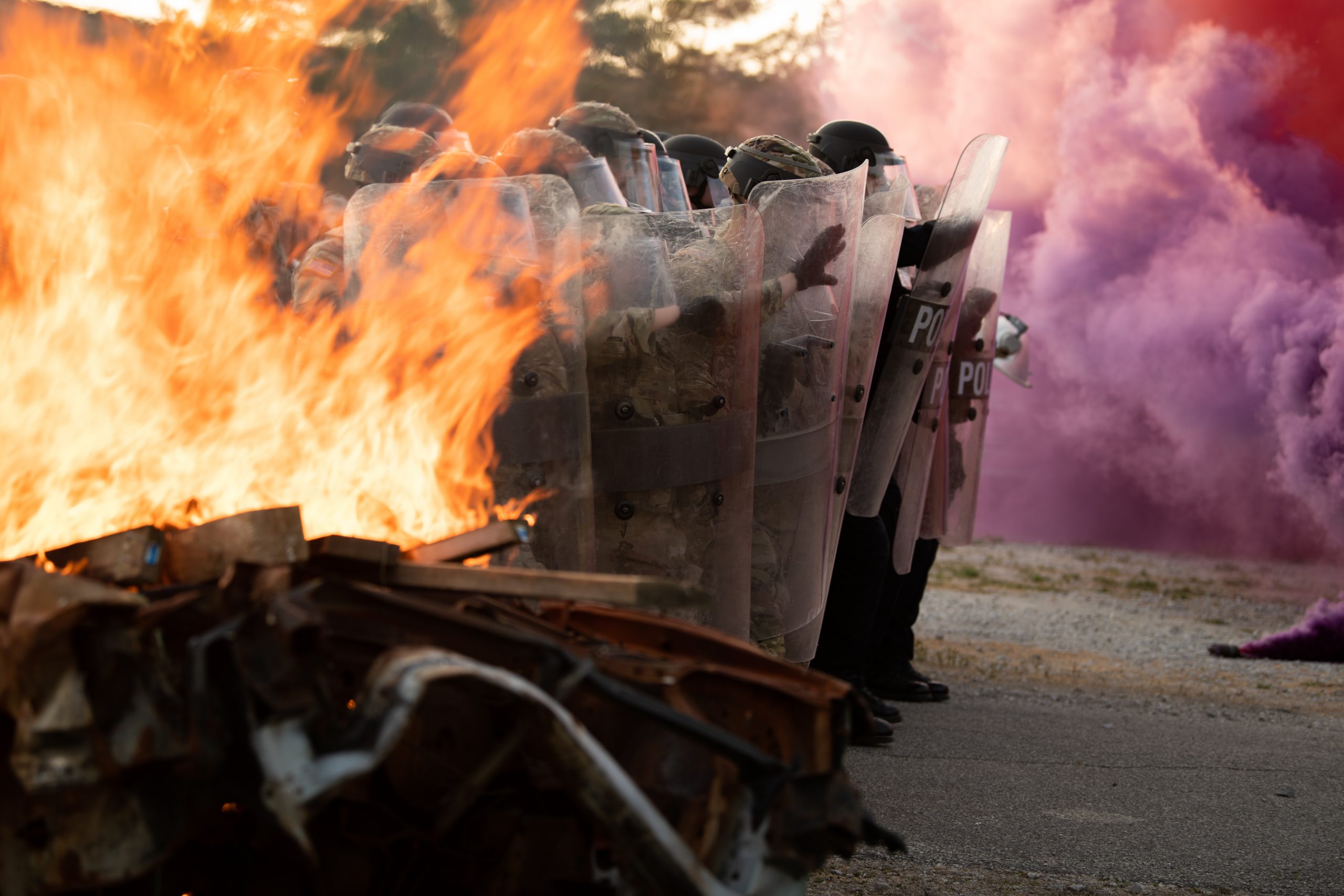
The training involved almost every possible scenario: “We had everything from water rescue operations to collapsed buildings and civil unrest…”-Lieutenant Colonel Stephanie Railey, Indiana National Guard Joint Force Headquarters
Indiana Air National Guard photo by Master Sergeant L. Roland Sturm, 10JUN2023.
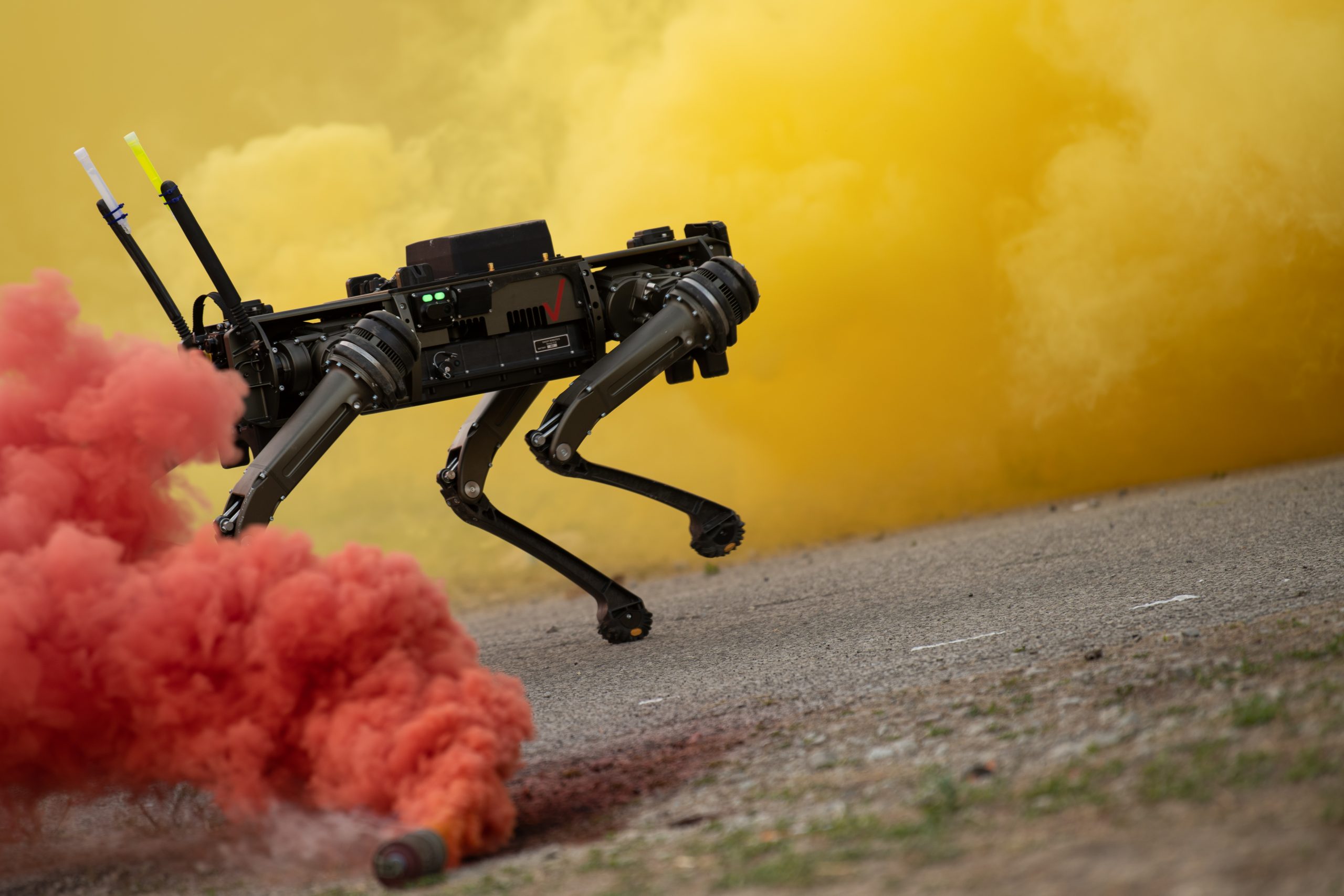
Even robot ‘dogs’ were used during the quake riot training: “The Air National Guard has a civil disturbance responsibility. The security forces squadron acts as an aid to civilian authorities in case there’s a civil disturbance that gets too big or out of hand.”-Major Joseph Williams, Indiana Air National Guard
Indiana Air National Guard video by Airman First Class Amber Anderson, 10JUN2023:
Indiana Air National Guard photo by Master Sergeant L. Roland Sturm, 10JUN2023.
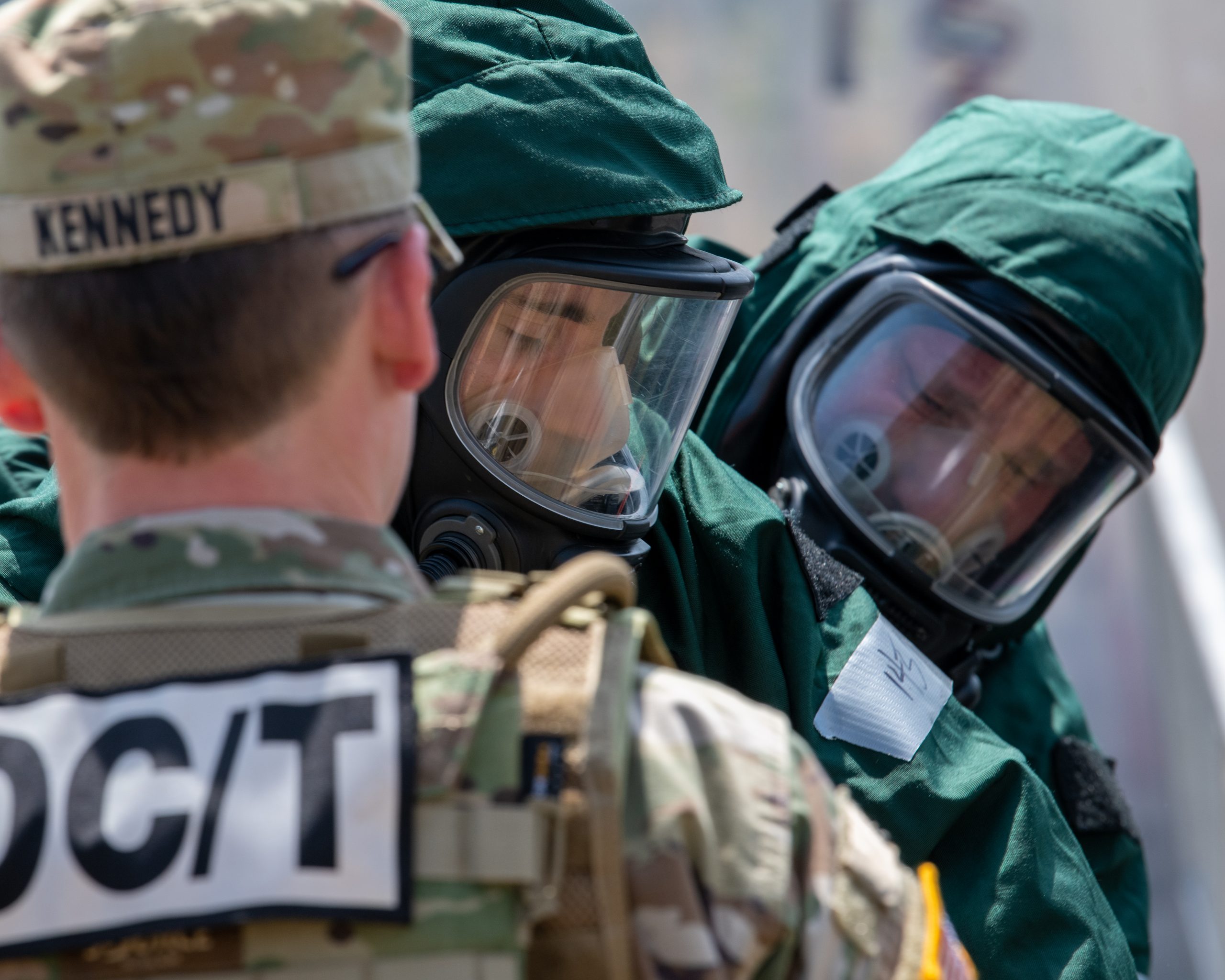
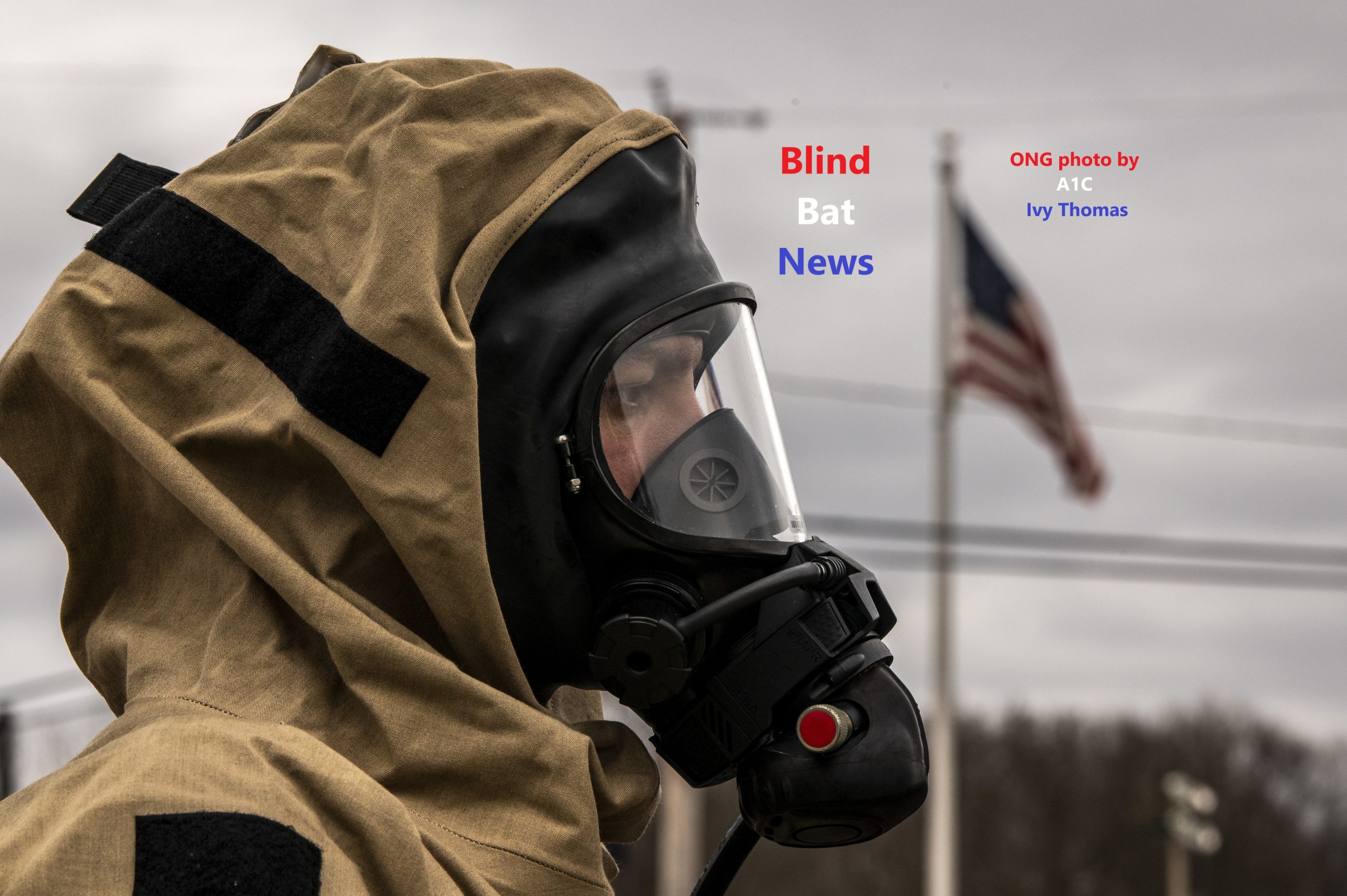
A Chemical, Biological, Radiological, Nuclear (CBRN) scenario involved recovering bodies from a contamination event! Indiana Air National Guard CBRN video by Airman First Class Amber Anderson, 10JUN2023:
“If and when Cascadia happens, the whole West Coast is going to experience upset conditions. Things are going to be upside down.”-Erik Petersen, U.S. Army Corps of Engineers-Portland District-Willamette Valley Operations
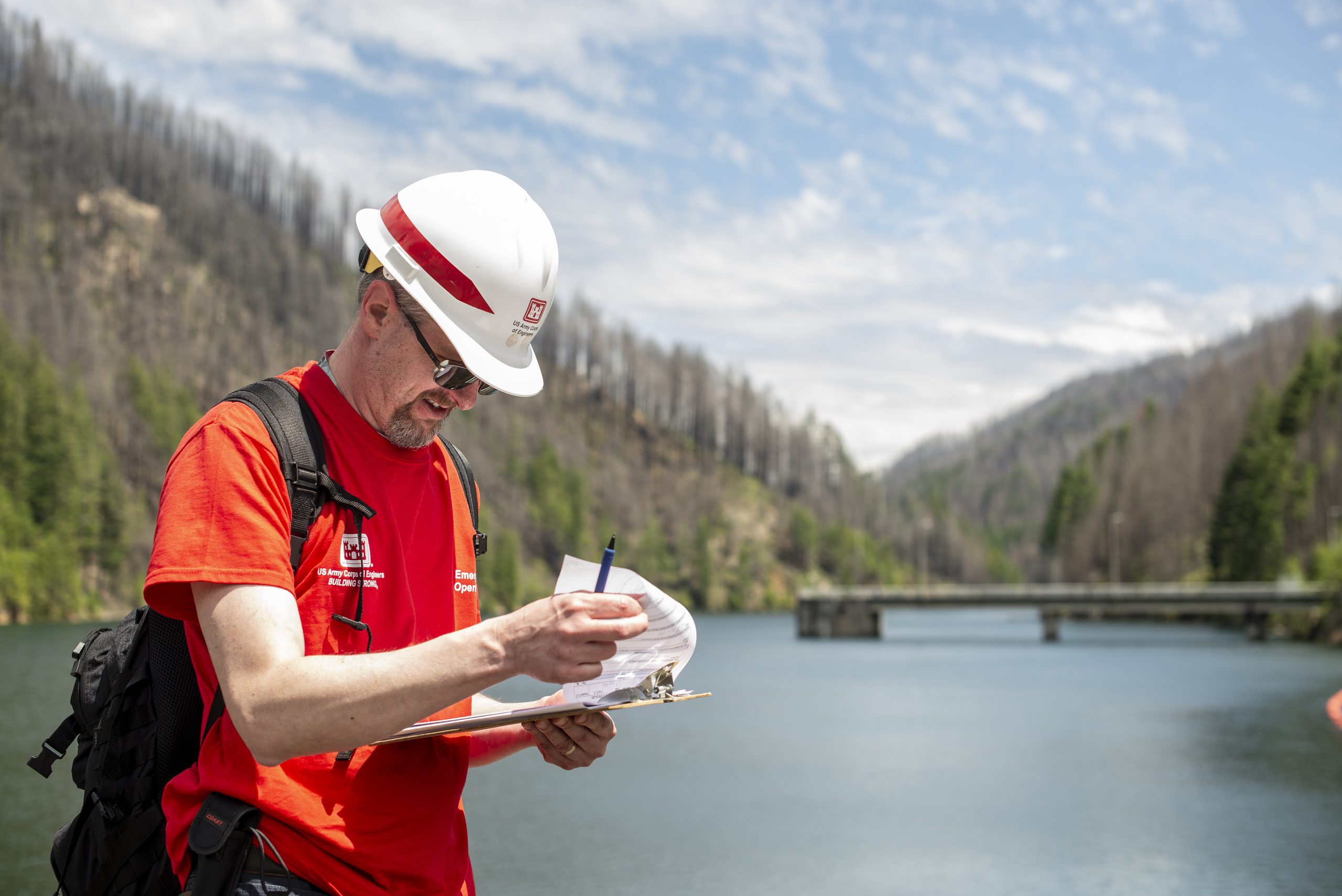
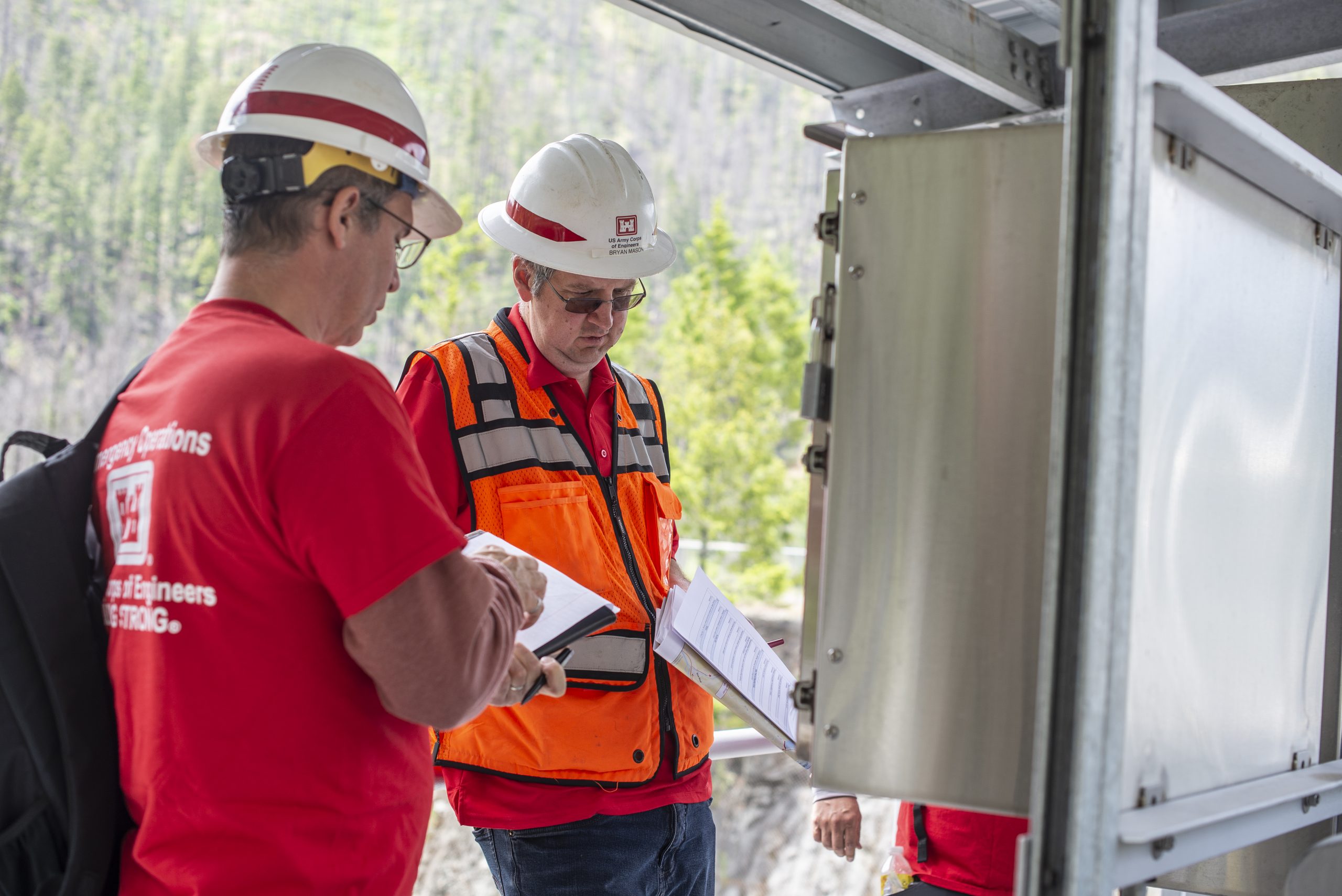
Blue River Dam, Oregon. U.S. Army Corps of Engineers photo by Chris Gaylord, 15JUN2022.
During FEMA’s (Federal Emergency Management Agency) 14-16JUN2022 Cascadia Rising training days, the U.S. Army Corps of Engineers inspected those 30 dams, saying “It’s the Super Bowl of disasters for emergencies, and you’ve got to have a team, you’ve got to practice, you’ve got to have some scrimmages, you’ve got to play some games, and you’ve got to go the playoffs before you get to the Super Bowl.”-Mark McKay, U.S. Army Corps of Engineers-Portland District Catastrophic Disaster Response Program
After Japan’s 11MAR2011 quake and tsunami, geologists and seismologist working for the U.S. government ‘got woke’ to the fact that old stories about an even bigger event hitting the Pacific Northwest of North America might be true, and a review of historical data, and new research, showed there really is a Super Bowl of disasters waiting to strike. The last estimated magnitude 9.0 quake and tsunami to hit the Pacific Northwest coastline was on 26JAN1700. The geologic data shows the Cascadia Event is relatively cyclic, meaning you can somewhat expect such a disaster every so many hundreds of years, and some Earth science ‘experts’ say it is overdue.
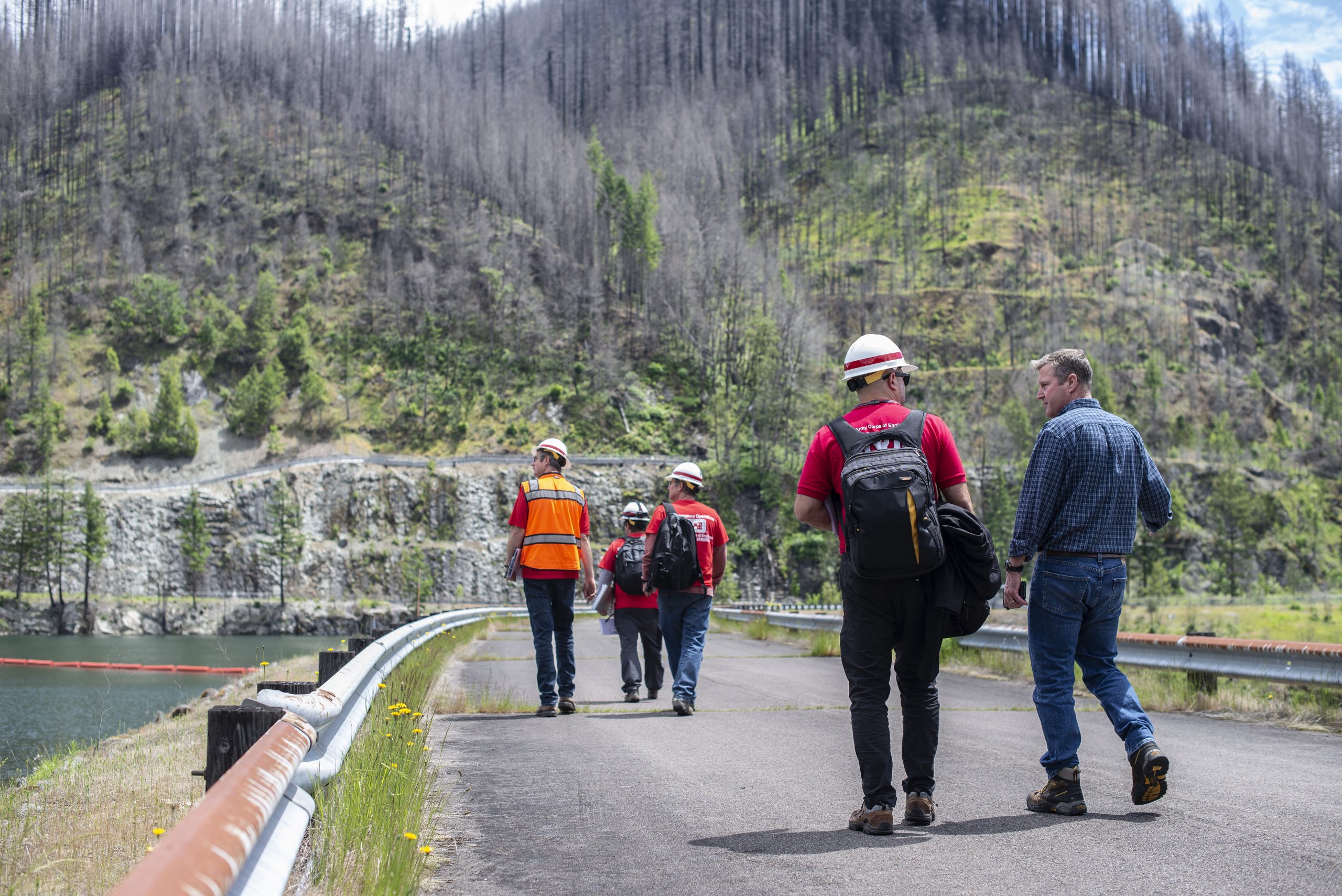
Blue River Dam, Oregon. U.S. Army Corps of Engineers photo by Chris Gaylord, 15JUN2022.
The inspection of the dams a week ago is not the first time, Army Corps of Engineers have spent several year now prepping the dam sites they are responsible for. One of those preparations is regular seismic studies and risk assessments of the dams. Another is to install briefcase sized battery powered satellite communications systems on at least a dozen remote dam sites. The age of electronic communications/social media has an Achilles Heel; electric power and communication links. The megathrust quake is expected to destroy any old fashioned communication transmission lines (both buried and telephone poles), as well electrical power transmission, cell phone service will also go down. People will need battery operated radios and/or phones that directly connect to satellites (Amateur Radio Emergency Services-Cascadia June 2022).
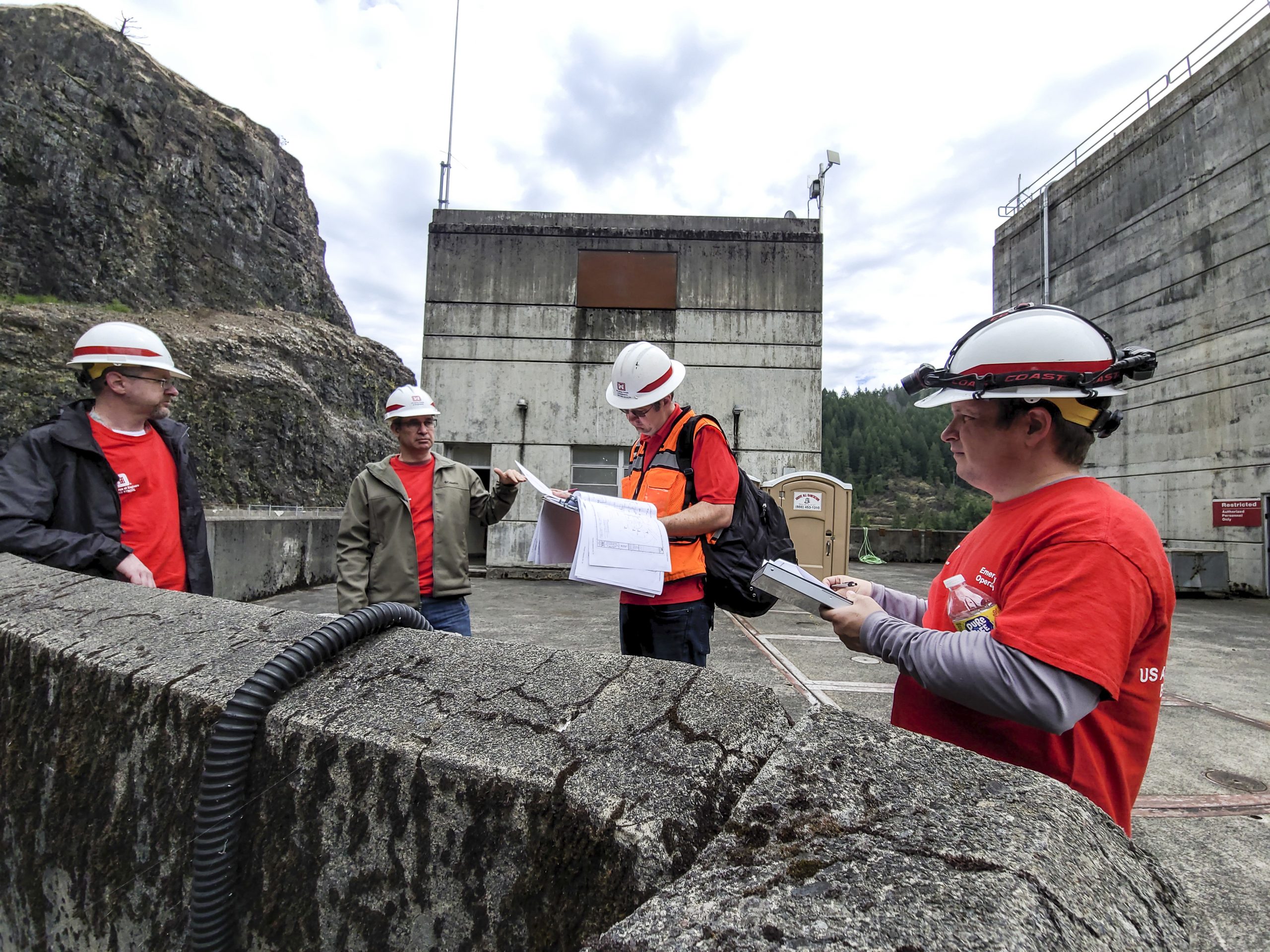
Blue River Dam, Oregon. U.S. Army Corps of Engineers photo by Chris Gaylord, 15JUN2022.
During this year’s Cascadia Rising event, the Corps of Engineers also realized they needed to stockpile food and water for the personnel who would be working on the remote dams after such a disaster.
The Corps of Engineers revealed another problem; all the dam reservoirs are the fullest they’ve been in the past few years, due to heavy late Spring rains. If the megathrust was to pop now, then all that extra water will exacerbate efforts to prevent rivers from flooding downstream.
Cougar Dam, Oregon. U.S. Army Corps of Engineers photo by Chris Gaylord, 15JUN2022.
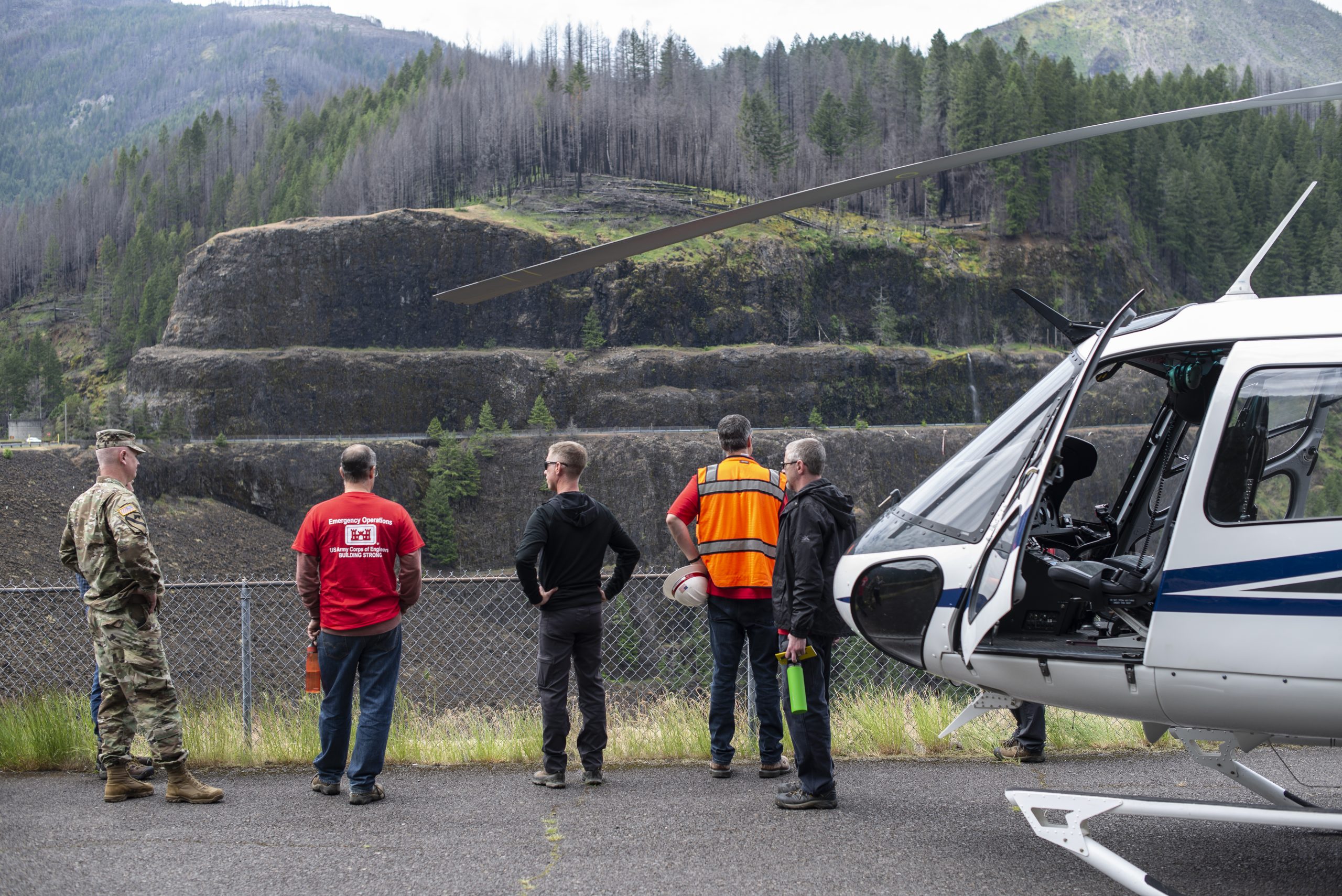
Yet another problem, pointed out during this year’s exercise, is that there might not be anywhere for helicopters to land: “If the earthquake hits, this parking lot might not even be here.”-Helicopter pilot who flew Local Damage Assessment Team (LDAT) to the top of Cougar Dam, in Oregon, during Cascadia Rising 2022
Parking lot ‘landing zone’ at Cougar Dam, Oregon. U.S. Army Corps of Engineers photo by Chris Gaylord, 15JUN2022.
FEMA’s worst case scenario is a tsunami up to 80 feet high, more than a million buildings damaged, thousands of people dead, even more injured and homeless, and that is if the epicenter was near the city of Florence, Oregon. The epicenter could actually be anywhere along the 7-hundred mile Cascadia Subduction Zone, which stretches from Northern California to British Columbia.
King County, Washington, tries to show you what the Cascadia Megathrust Event will look like:
“The physical devastation will be significant, and the humanitarian impacts will be felt far beyond the earthquake zone. Now is the time to come together, question, and challenge our plan so that when one of the biggest natural disasters to strike our nation takes place, we are ready to act.”-Willie G. Nunn, FEMA Region 10
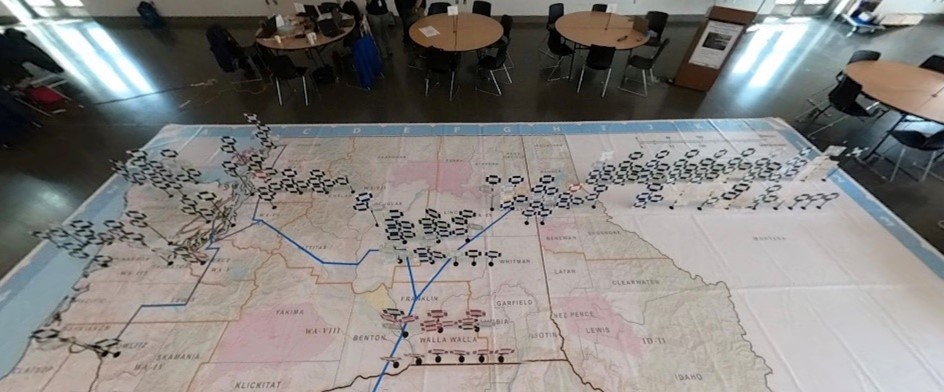
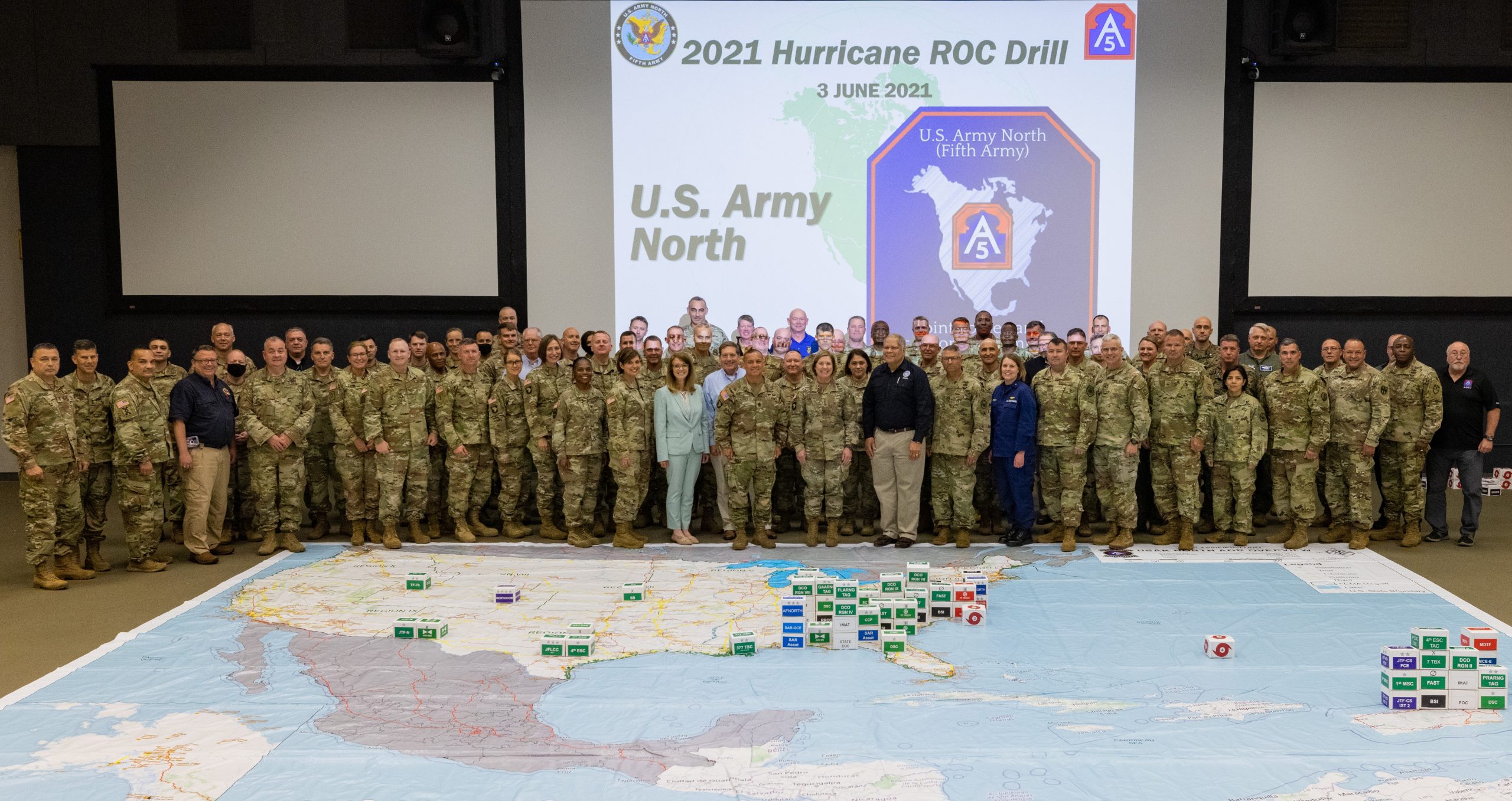
In the past week the Federal Emergency Management Agency’s (FEMA) Region 10 conducted Cascadia Rising 2022 Rehearsal of Concept ‘pre-exercise’ (also calling it a “discussion-based exercise”) at the Pierce County Readiness Center on Camp Murray, Washington.
Giant floor map used in the recent Cascadia Rising exercise.
A much larger multi-state exercise is scheduled for June 2022, involving the National Guard of the states of Alaska, Idaho, Oregon, Washington, as well as various tribes and federal agencies, Department of Defense, and the Canadian Province of British Colombia.
KING5 connects CoViD with Cascadia:
Oregon creates new Cascadia proof Treasury building:
Washington State’s Emergency Management Division says having an old fashioned radio is key to survival:
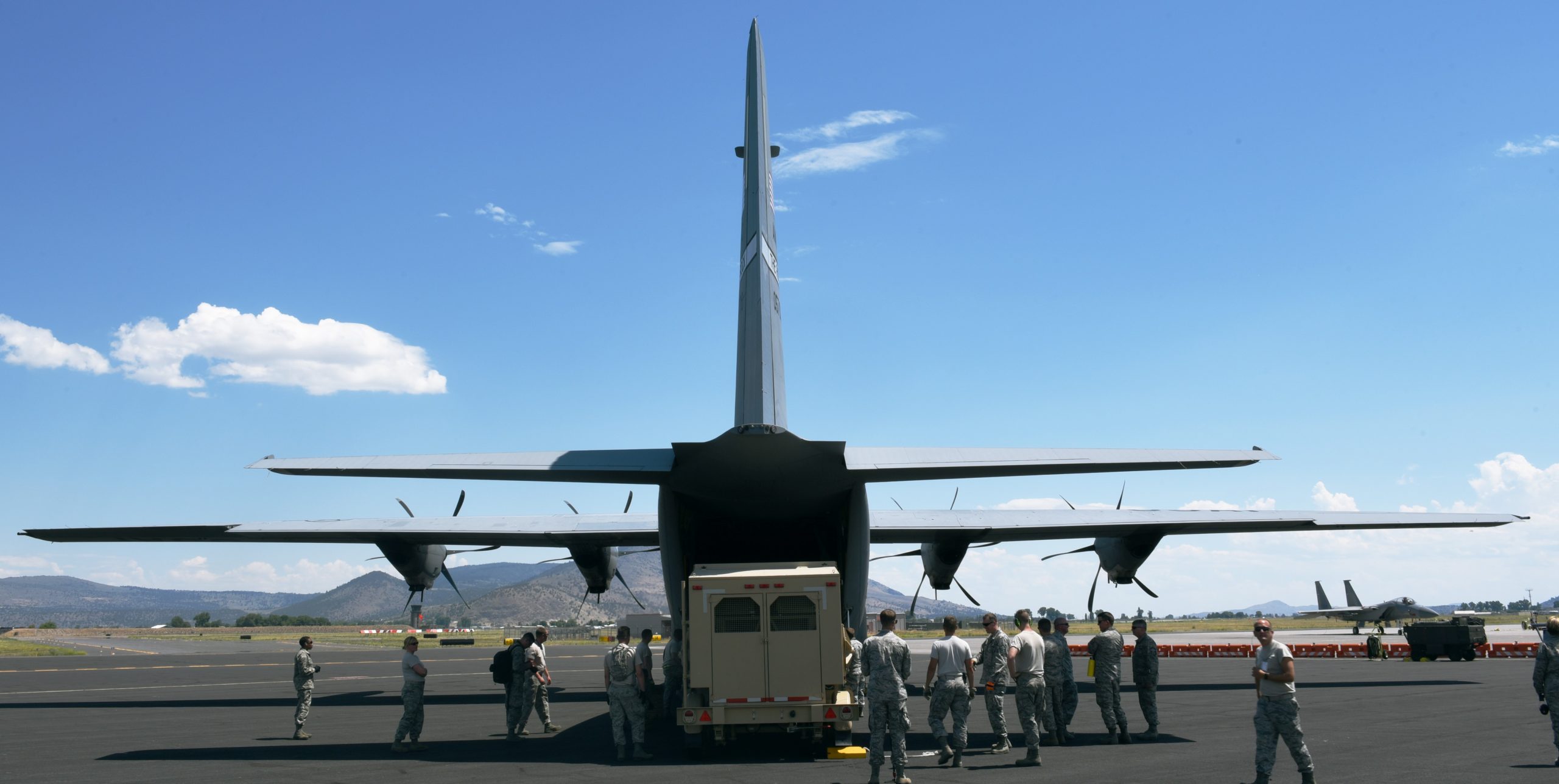
“The purpose of the exercise is to demonstrate a proof-in-concept that Kingsley Field is capable of hosting large-scale cargo aircraft in the event of a Cascadia Subduction Zone natural disaster.”– Lieutenant Colonel Chris Wright, 173rd Fighter Wing, Oregon Air National Guard
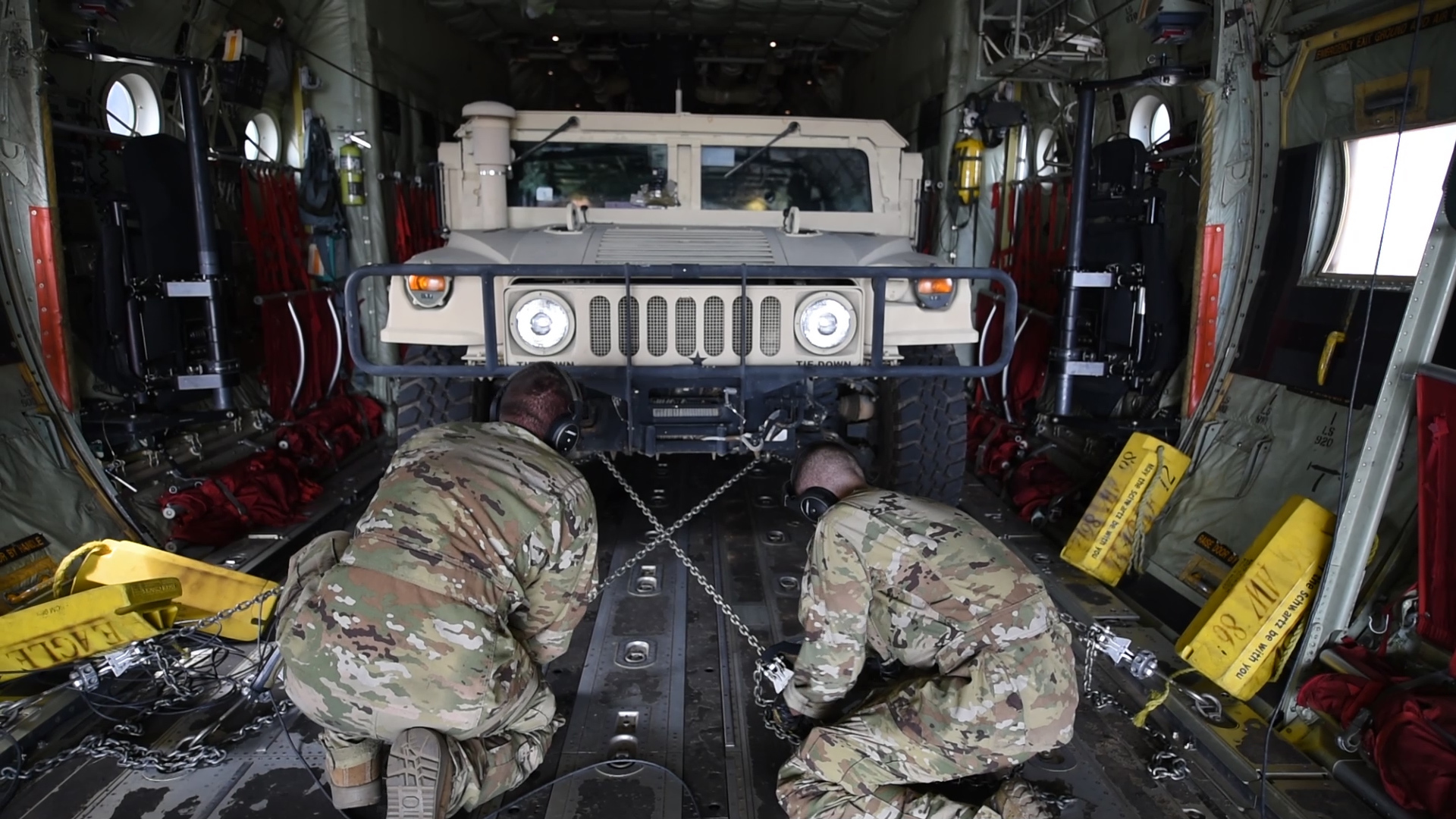
In June2019, the Oregon Air National Guard conducted the Cascadia Airlift disaster response exercise. It also included active U.S. Air Force units from Little Rock Air Force Base in Arkansas, and Yokota Air Base in Japan.
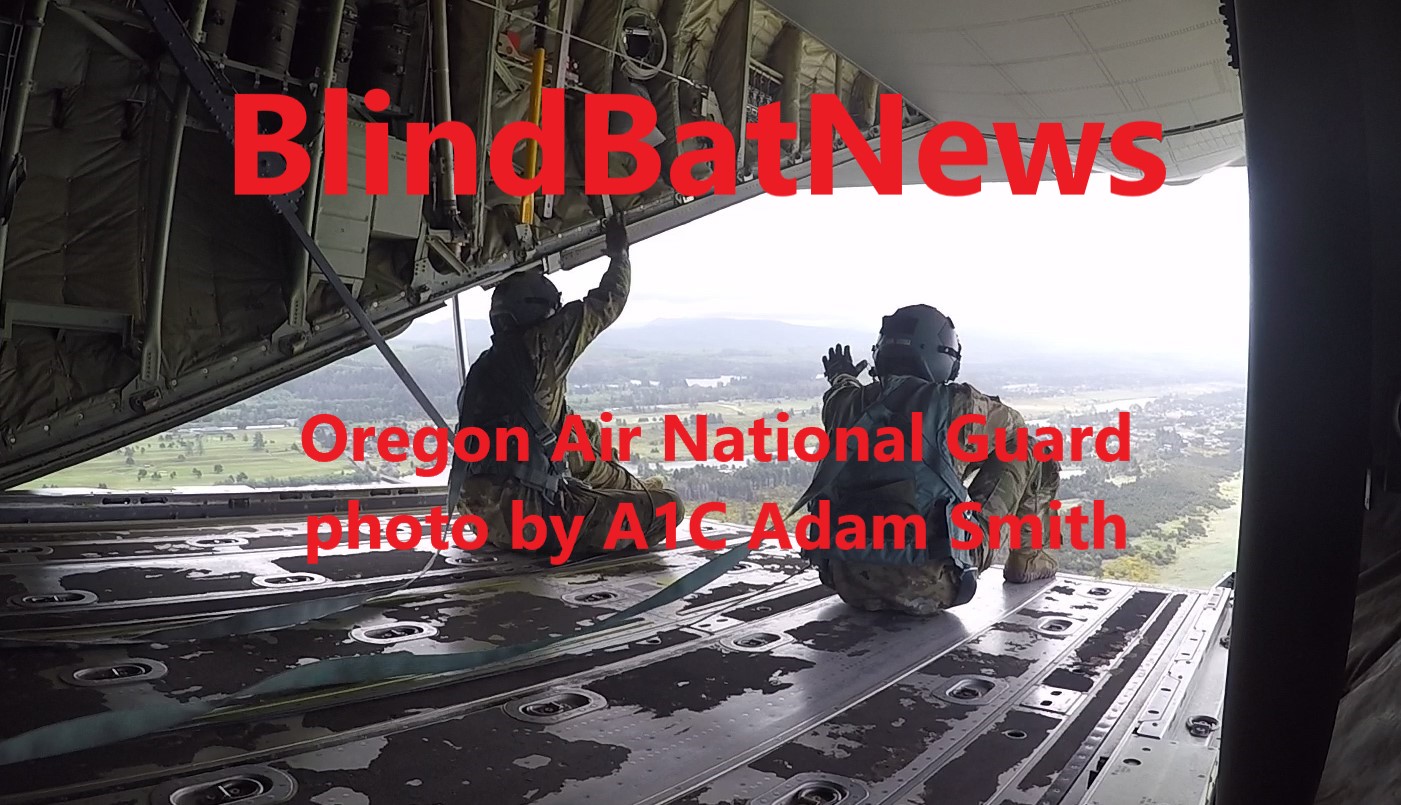
Oregon Air National Guard photo by Airman First Class Adam Smith, 07JUN2019.
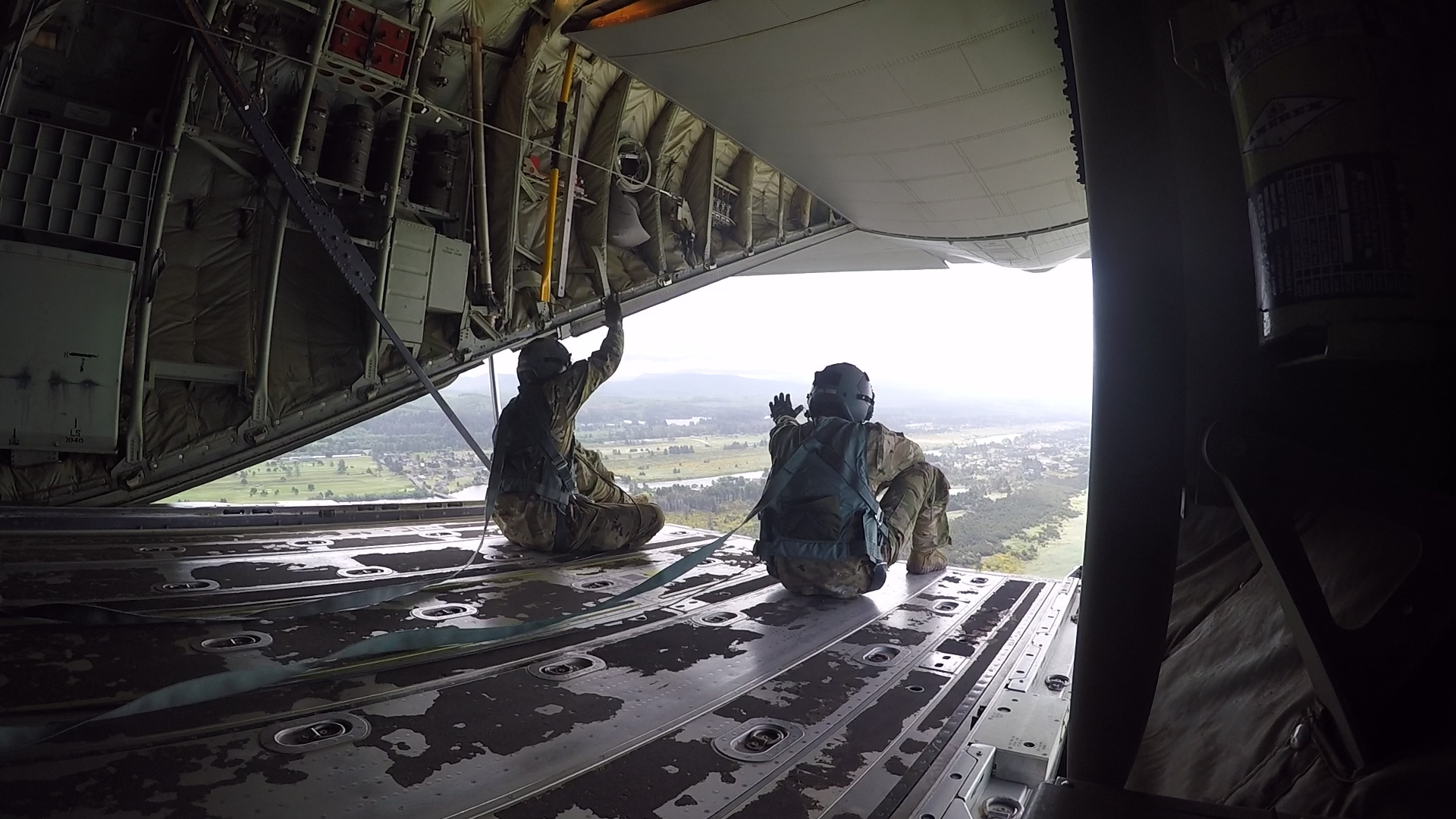
The aircrews flew over the Astoria area of Oregon, practicing dropping humanitarian supplies from their C-130J Super Hercules aircraft. Oregon’s Kingsley Field has been selected as a location that might still be accessible after a CSZ (Cascadia Subduction Zone) event, and thereby allow government disaster response personnel to operate from.
Oregon Air National Guard photo by Airman First Class Adam Smith, 03JUN2019.
Oregon Air National Guard music video report, by Airman First Class Adam Smith, about the 2019 Cascadia Airlift Exercise:
But this was not the first Cascadia Airlift exercise, the first one was in July2018, also in Oregon. This involved C-130Js from Arkansas and Oregon’s 173rd Fighter Wing, on Kingsley Field. This shows the concern over a CSZ as the 173rd operates F-15 Eagle fighters, not C-130J cargo planes: “…we don’t normally host airlift. It was a blank slate and first proof-of-concept.”-Lieutenant Colonel Chris Wright, 173rd Fighter Wing, Oregon Air National Guard
Oregon Air National Guard photo by Airman First Class Adam Smith, 14JUL2018.
Oregon Air National Guard music video report, by Staff Sergeant Riley Johnson and Technical Sergeant Jason Van Mourik, about the 2018 Cascadia Airlift Exercise:
The Cascadia Subduction Zone is a fault that extends more than 6-hundred miles up the Pacific Coast, from Northern California to Canada, and historically (about every 3-hundred years) has generate 9+ magnitude catastrophic earthquakes, followed by massive tsunamis.
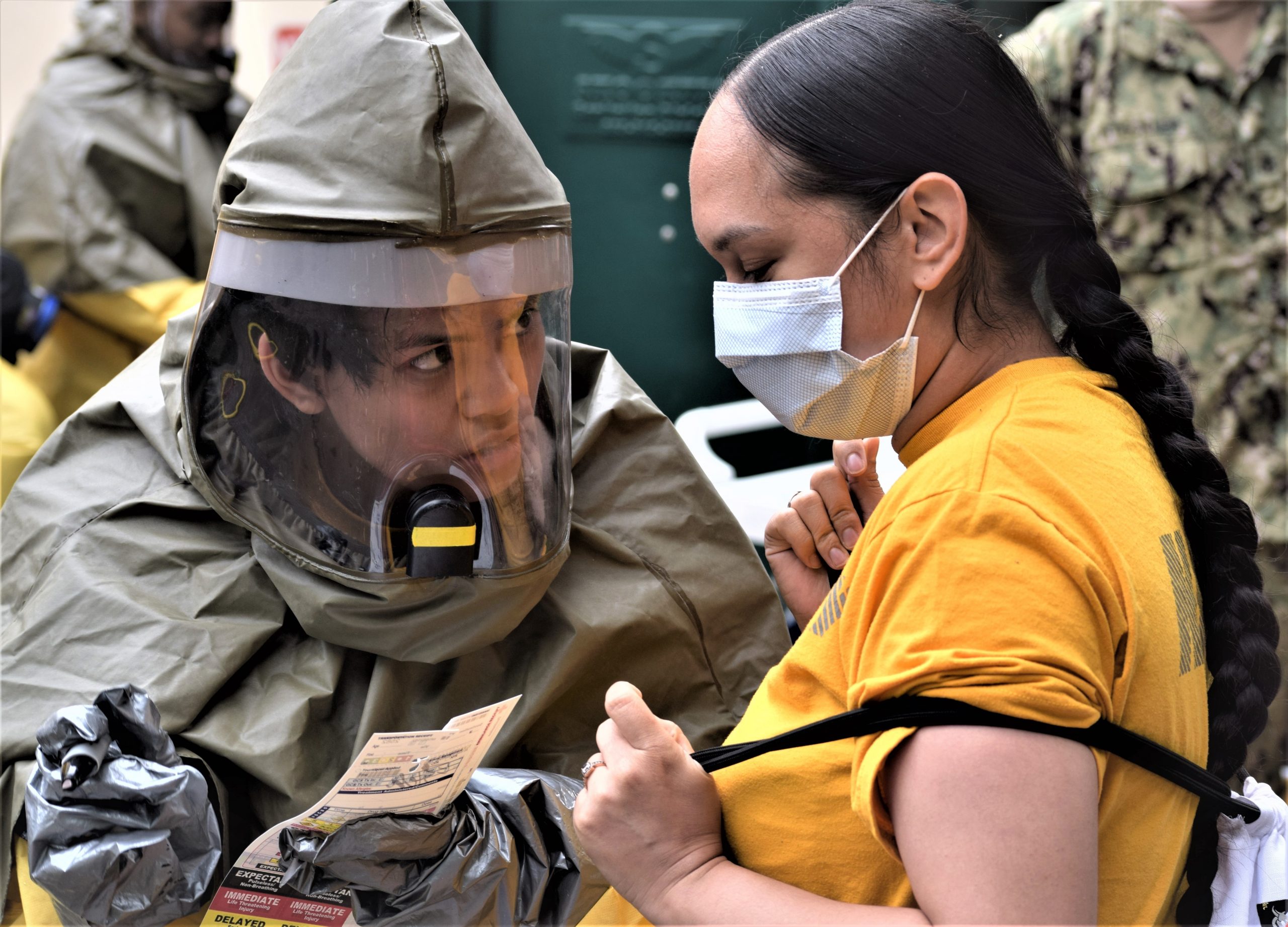
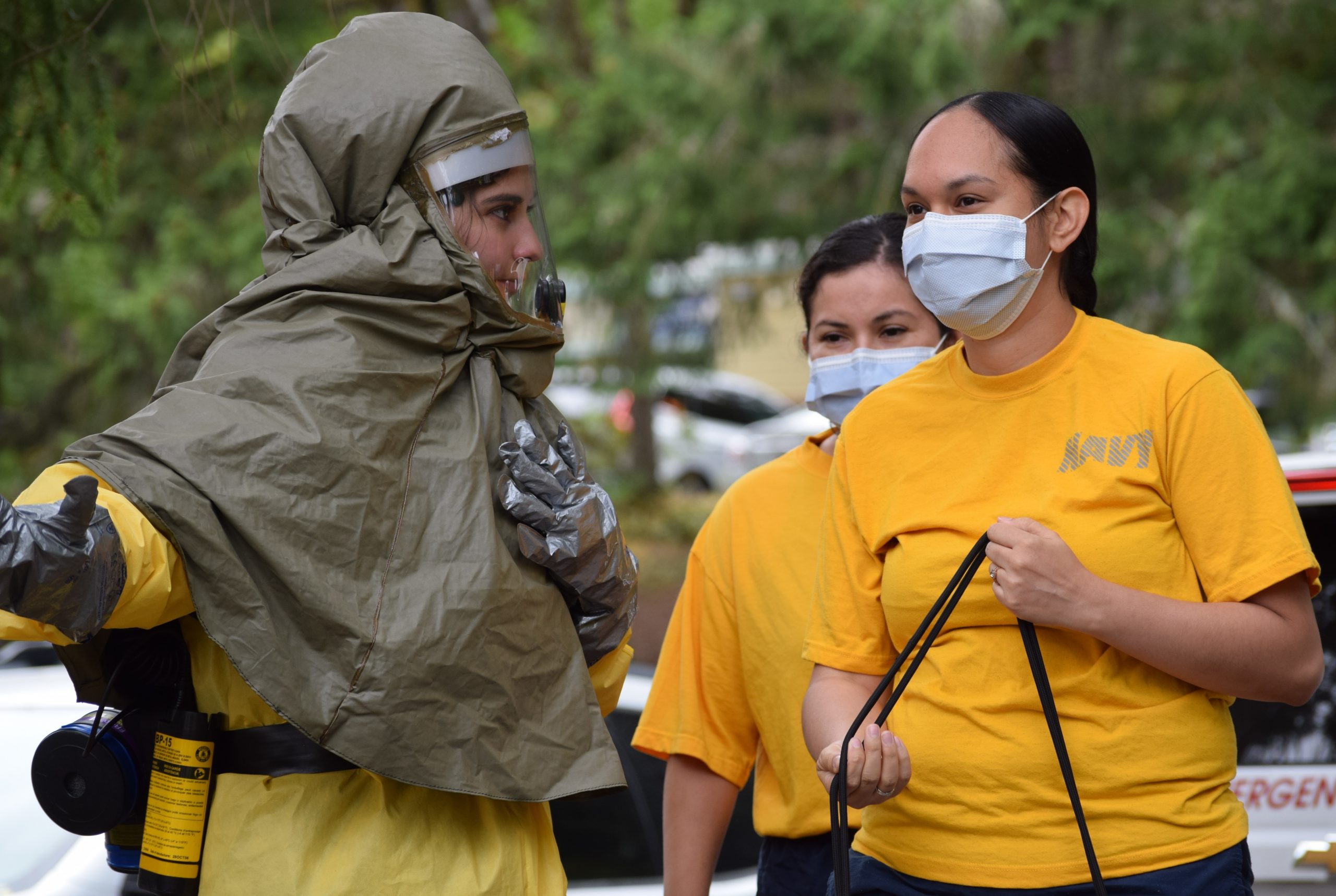
“To our knowledge, this is the first time, at least at Navy Medicine commands, to have a fire engine pump hundreds of gallons of water to a DECON team to use in helping decontaminate patients.”-Terry Lerma, Naval Hospital Bremerton emergency manager
Preparations for the overdue Cascadia Event continues, this time striking the U.S. Navy’s hospital on Bremerton, Washington.
During the second week of July 2021, Naval Hospital Bremerton conducted Operation Black Wind (in conjunction with Citadel Rumble) to assess how to respond to a catastrophic natural disaster.
U.S. Navy photo by Douglas H Stutz, 15JUL2021.
Operation Black Wind’s scenario is set immediately after ‘a sudden and significant seismic event’ that lasted for at least one minute. It also involved military personnel becoming sick due to a haz-mat truck overturning as a result of the quake. The scenario of massive amounts of hazardous materials being released and affecting the local population has only recently been added to the U.S. Department of Defense/FEMA’s disaster response training.
Citadel Rumble is a yearly large scale U.S. Navy ‘all hazard exercise’ held across the West Coast of the United States: “This exercise readies our personnel for response and recovery before, during and after a natural disaster or other all-hazard events. Installations in our West Coast regions face risk of damaging earthquakes and wildfire encroachment, so this training is vital to expedite recovery and maintain mission readiness should such events occur.”– Mark Sinder, Director of Operations for Commander, Navy Installations Command